|
|
||
|
|||
|
|
||
|
|||
Hints and Things does not use any 1st Party cookies - more information .
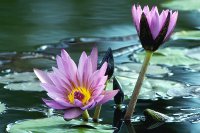
HOW TO STOCK AND MAINTAIN A GARDEN POND A garden pond can be left to its own devices as a miniature nature reserve, but will be a much more attractive feature if it is stocked with aquatic plants and ornamental fish. Get the natural balance right and the pond will be virtually self-sustaining, needing only occasional attention to keep it is good condition. If you are stocking a new pond from scratch, get the plants established before introducing the fish. Always buy fish from a reputable source, to ensure that they are healthy to start with. POND PLANTS There are several distinct groups of plants you can grow in or around a garden pond. These are the main ones:- Oxygenators are essential plants for keeping the pond healthy. Some are rooted, but most simply float in the water, absorbing carbon dioxide and releasing oxygen as they grow. Since they multiply fairly rapidly, start with a few small clumps and be prepared to cull the plants ruthlessly as they spread. Simply hook out excess growth with a garden rake and put it on your compost heap.
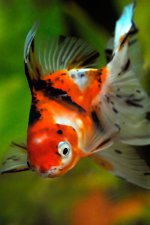
Marginals are planted in containers set in shallow water on shelves around the pond margins. This group includes various species of Iris, Flag, Marsh Marigold and the Arrow Head. Floaters such as Fairy Moss, Greater Bladderwort and Water Soldier are flowering plants that simply float on the pond. The Water Soldier sinks to the bottom in winter. Marsh Plants, such as Bullrushes, can be planted at the edges of the pond, if the liner is extended and filled with soil to create waterlogged bog conditions. Get specialist advise when choosing plants to suit your particular pond size, containers and special pH-balanced pond soil. Do not be tempted to use ordinary garden soil, or to plant directly in soil spread on the bottom of the pond. Golden Rule - Always top pond plant containers with gravel to stop fish from disturbing the soil and therefore discolouring the water. FISH FOR GARDEN PONDS The humble Goldfish, bred by Chinese and Japanese fish-keepers from a dull brown wild species, is the most common fish kept in garden ponds.
***I have been advised by Matt Williams of www.derbypondservices.co.uk that this is incorrect - as tench emit waste like any other fish, they do not help to keep ponds clean. Presumably, however, they do help to clear up any food dropping to the bottom of the pond. The Golden Orfe with its gold and black markings, is by contrast, an active surface feeder and an excellent display fish. However, it grows quite large so is not suitable for small ponds. If you have a larger pond you can consider keeping Koi. These are an ornamental species of carp, much prized by the Japanese for their exotic colouring and marking. They come in single colour, two colour and multi-coloured varieties, further distinguished by their scale development. Always buy Koi only from a reputable source and make sure that your garden is secure. Koi, especially large or well coloured specimens, are extremely valuable. HOW MANY FISH? To assess how many fish your pond will support, estimate its surface area and allow 60sq cm of surface for every 1 cm of fish (equivalent to 24 sq. inches per inch of fish). Since fish grow and breed, it is best to start off with around one-third of the theoretical maximum number. For example, a 1.8 x 1.2m (6ft x 4ft) pond will, in theory, support 360cm (144ins) of fish, equivalent to 36 individuals averaging 10cm (4ins)long, but, in practice, you should have only about 12. Golden Rule - Your pond needs to have part of the area at least 60cm deep for goldfish and 1.5m or more for Koi if they are to be left over winter safely in the pond. BUYING AND LOOKING AFTER FISH
Don't overfeed fish; one meal every other day is enough in winter, increasing to twice a day in summer. Use a feeding ring to confine the food to one spot and supply no more food than can be eaten in about ten minutes. Pond fish can suffer from a range of ailments, including parasites, fungal infections and fin rot. You can buy proprietary preparations to treat these, either in the pond or by catching and isolating affected fish in a small temporary 'hospital' pond. Golden Rule - When you are creating a new pond, get the plants established and the water clear and balanced before introducing any fish. LOOKING AFTER YOUR POND The biggest enemies of your pond and its inhabitants are algae in summer, fallen leaves in autumn and ice in winter.
FILTERS AND PURIFIERS If you have a pump running a fountain or waterfall, you can fit a mechanical filter to the pump inlet to remove algae and other particles that cause cloudy 'green' water. Alternatively, you can route the circulating water through a tank filter sited outside the pond; this sieves out particles and also encourages the growth of bacteria that remove toxic waste. Tank filters are best for larger ponds. If algal pollution is a major problem and cannot be controlled by natural or chemical means, you could consider using a water purifier. This treats water circulated through it with ultraviolet light, so effectively eliminating green water. COPING WITH NATURE
Frogs*, toads and possibly newts* will find their way to your pond quite naturally and will make it their home. If a population explosion threatens at spawning time, collect the excess frogs spawn and transfer it either to a permitting neighbour's pond or to natural country ponds (best to seek professional advice before undertaking this as it can spread disease). Do not tip it down the drains. If you have a pump in the pond remove all the spawn or it will block the filter inlet. RUNNING REPAIRS The main problem for any pond is springing a leak and mending one will mean draining the pond down to the level of the hole or tear so you can repair it. If you have to drain the pond completely to make a repair first transfer the fish and plants to a temporary pond made by draping polythene sheeting inside dry laid brick walls.
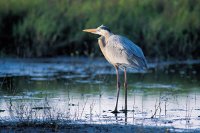
*Theresa has brought me to task saying "I was very dismayed when I read about tying black thread on pegs around a fishpond so that herons would get their legs snagged to prevent them from getting the fish. Herons are a protected bird and this information is wrongly advised and cruel. I would appreciate if you would remove this. I have left the item in place as it is suggested by many other sources including RSPB. * Emma has written to emphasise that frogs/newts etc. will not cause fish any problems. The Great Crested Newt is a protected species and should NEVER be disturbed, so people should feel very privileged if they have these in their ponds. Another thing to bear in mind is that some fish can eat tadpoles. * Margaret comments "Newts may not harm fish, but fish will quickly eradicate newt eggs! If you have a wildlife pond, keep it that way and don't add fish!" * Stuart comments as follows:- Frogs can actually harm fish. My mate had so many frogs returning back to his pond this year and with the water being cold the fish lay still for a lot of the time the frogs gripped onto them and where they took hold of the fish was over the gills. Thus the fish actually drowned as they could not function their breathing. Just a word of advice - too many frogs or toads wiped his pond out of over 100 fish. * Amber writes - "One of your viewers said that frogs would not harm your fish. One thing that needs added to that statement is, they can depending on the size of your pond. I live in Texas where summers get hot and I have a 500 gal garden pond with small waterfall and fountain for circulation. When the frogs lay their eggs and the eggs hatch into tadpoles, the tadpoles require oxygen also. In the hot summer months, oxygen is depleted already and when you add lots of oxygen hungry mouths to the mix, you are looking at certain death for your fish if the tadpoles stay, this happened to me one summer when I was new to. My cure to this problem was when they hatch, catch them and take them to a stock pond." *Norman Buxton comments - "You mention that stringing cotton or similar around the perimeter will deter herons. In my largish pond, it certainly does not stop them. There are two ways they can still get to the fish. Firstly, they can hop over anything strung round the edge. This has happened regularly at the shallow end of my pond to the extent I don't bother any more. Secondly, I actually made the other edges of my pond very steep so herons had nowhere to stand, but believe it or not, I found early one morning last week a heron floating (yes, floating like a duck) in the middle. I tried to grab the camera to prove it was floating, but it saw me and all I got was a snap of the heron just rising off the water. Things to bear in mind when installing a garden pond. Click here for detailed instructions on how to construct a simple garden pond.
Copyright © 2000-2020 Hints and Things cannot be held responsible for any information given on this site nor do they necessarily agree with, or endorse, the views given by third parties. |