ashers and o-rings, and, in time, an assortment of
wrenches
For electrical work, add:
a roll of electrical tape
a variety of wire nuts
a wire stripper
and crimper
needle-nose pliers.
Don't buy everything at once but start with few important items: a
standard hammer, four or five screwdrivers, a pair of pliers, an
adjustable wrench, a crosscut saw, a staple gun, and a measuring tape; and
some basic materials like glue; duct, masking, and electrical tape;
penetrating oil; and assorted nails, screws, and anchors. Add other items
as they are required.
|
Best Cordless Drills for the DIY-er |
 |
As you tackle increasingly difficult jobs, you will want to buy more
power tools, but don't throw the hand tools out. When you want to tighten
one loose screw, you're going to reach into your tool box for that handy
screwdriver.
That being said, the power tool most loved by DIY homeowners is the
cordless power drill, or drill/driver (combination drill and screwdriver),
and the plug-in versions. Dewalt
cordless drills are a great make and are available in most retail and
online merchants.
Cordless impact drill/drivers are more expensive, good for driving long
screws and bolts, strong enough to handle car-wheel nuts, and noisy enough
to require ear plugs use.
Comparison shop and check out cord and cordless models with various
features and prices offered by reliable manufacturers such as Hitachi,
Bosch, Makita, Ridgid, Bosch, Ryobi, Delta, and Craftsman.
|
Table Saw Comparisons for the DIY-er |
 |
For sawing, you need various hand and power tools. The choices will be
dictated by the particular jobs you are doing.
You can manage most DIY
projects with a combination of crosscut, hacksaw, and keyhole saws, but
you will soon become impatient with the slowness of these hand saws. When
choosing power saws, compare the models sold by the manufacturers
mentioned above.
1. Portable jigsaw – has a motor-driven gear assembly that moves a shaft
and blade up and down.
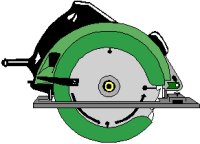
2. Portable circular saw – makes straight cuts in almost any material.
3.A sliding
miter saw – can cut angles for different style molding like
crown, window and baseboards.
4.Table saw or bench saw – is one of the most popular power saw with a
circular blade protruding through a slot from under a rigid table.
5. Radial arm saw – is a circular saw suspended from a track on a metal
arm over a wooden table, and the motor and blade can be moved along the
arm and locked into any position. It can make vertical, horizontal, bevel
and miter/mitre cuts, and can be fitted with other tools to drill, grind, sand,
or shape.
Comparison shop and read consumer reviews to make sure you are purchasing
the hand and power tools that are right for you and right for the jobs for
which you are planning to use them.
About the Author:
Scott Gray is currently a home improvement handyman enthusiast
and freelance writer who enjoys providing tips to consumers who are in the
market for hand and power tools like Dewalt
table saws. (www.everydayhandyman.com )